
All posts by George Walters

George Walters is a Canadian columnist and author with more than forty years of writing experience. For over twenty years he has written a weekly column for Postmedia Network — Canada's largest newspaper chain — never missing a single week, publishing fifty-two stories a year. Combined with his work in Reader's Digest Community Voices, World News, Country Living, The Country Register, and farm and rural lifestyle magazines across Canada, he has published well over two thousand stories drawn from everyday life. He writes about farm work, fishing, old trucks, and the kind of people you only find in small towns — but just as likely he'll hand a voice to a weathered telephone pole, or turn his eye on something happening in the world today and tell you exactly what he thinks about it. No subject is off limits. If there's a story in it, George will find it. He has been called a philosopher of everyday life, a description that came up more than once during his television appearances over the years — and it's not hard to see why. His writing has a way of making the ordinary feel worth sitting with. He is the author of eleven books, including yearly short story collections and the Clay Moretti Files mystery series. Clay is a fifty-year-old private investigator who drives a 1967 Ford Galaxie, smokes cigars, and operates by a code the modern world gave up on a long time ago. The cases are present day. The man handling them is not. All titles are available in paperback and eBook on Amazon. Together, George and his wife Ruth have also created Elmer Finds His Way, the first in what he hopes will be a long series of children's books. Ruth did all the illustrations, as she has for every one of George's books — and beyond that she designed and painted the covers as well. Her work is woven into every page of everything he has published. A few words from readers: "I pulled up a kitchen chair and read your story three times." "You have a way of making a person homesick for a place they haven't been to." "Thank you for writing things that make old people and kids feel the same way at the same time." All my titles are available in paperback and eBook on Amazon.ca here.

Supper Time!

Baked Potato, Noodles & Cheese, Some Veggies alongside some chicken strips. Again … simple but very tasty.

Click on Image to Enlarge!

Here’s a classic recipe for Baked Potato, Noodles & Cheese, Veggies and Chicken Strips that you can try at home:

Baked Potato: Ingredients:

  • 4 medium-sized potatoes
  • 1 tablespoon olive oil
  • Salt and pepper, to taste

Instructions:

  1. Preheat your oven to 400 °F (200 °C).
  2. Scrub the potatoes clean and pat them dry with a paper towel.
  3. Pierce each potato several times with a fork.
  4. Rub olive oil over the potatoes and sprinkle with salt and pepper.
  5. Place the potatoes directly on the oven rack and bake for 45–60 minutes, or until tender.
  6. Remove from the oven and allow cooling for a few minutes before serving.

Noodles & Cheese: Ingredients:

  • 8 oz. elbow macaroni
  • 2 tablespoons butter
  • 2 tablespoons all-purpose flour
  • 2 cups milk
  • 2 cups shredded cheddar cheese
  • Salt and pepper, to taste

Instructions:

  1. Cook the macaroni according to the package instructions.
  2. In a separate pan, melt the butter over medium heat.
  3. Whisk in the flour until smooth.
  4. Gradually add the milk, whisking constantly, until the mixture is smooth.
  5. Bring the mixture to a simmer and cook for 2–3 minutes, or until thickened.
  6. Add the cheese and stir until melted.
  7. Season with salt and pepper.
  8. Drain the macaroni and stir it into the cheese sauce.
  9. Serve immediately.

Veggies: Ingredients:

  • 2 cups mixed veggies (e.g. carrots, green beans, broccoli)
  • 1 tablespoon olive oil
  • Salt and pepper, to taste

Instructions:

  1. Bring a pot of water to a boil.
  2. Add the veggies and blanch for 2–3 minutes, or until tender-crisp.
  3. Drain the veggies and rinse with cold water.
  4. Heat the olive oil in a pan over medium heat.
  5. Add the veggies and sauté for 2–3 minutes, or until heated through.
  6. Season with salt and pepper.
  7. Serve immediately.

Chicken Strips: Ingredients:

  • 1 lb. chicken breast, cut into strips
  • 1 cup all-purpose flour
  • 2 teaspoons garlic powder
  • 2 teaspoons paprika
  • 1 teaspoon salt
  • 1/2 teaspoon black pepper
  • 2 eggs, beaten
  • 2 cups breadcrumbs
  • 1/4 cup vegetable oil

Instructions:

  1. Preheat your oven to 400 °F (200 °C).
  2. In a shallow dish, combine the flour, garlic powder, paprika, salt, and pepper.
  3. In a separate dish, beat the eggs.
  4. In a third dish, place the breadcrumbs.
  5. Dip each chicken strip first in the flour mixture, then in the egg mixture, and finally in the breadcrumbs, pressing the breadcrumbs onto the chicken to help them adhere.
  6. Heat the vegetable oil in a large pan over medium-high heat.
  7. Add the chicken strips and cook for 2–3 minutes per side, or until golden brown and crispy.
  8. Transfer the chicken strips to a baking sheet and bake for 10–12 minutes, or until cooked through.
  9. Serve immediately with the baked potato, noodles & cheese, and veggies.
  10. Enjoy, I know I am!! GW

All my books are available on my Amazon Author Page.

If you purchase a book, a brief Amazon review really helps new readers discover my work—it means a lot.

Support my writing: Support My Writing

In Closing, I Would Like to Wish You Well!

George Walters | [email protected]
Septic Cleaning Time

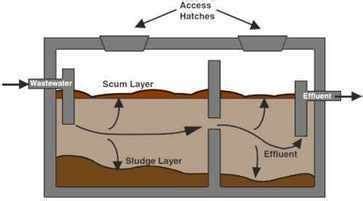
If you’re living out in the country like my lovely wife and I do here in Northern Ontario, then chances are you’ve got yourself a septic tank. And let me tell you, it’s mighty important to keep that thing clean and well-maintained if you want to avoid any nasty surprises!

Now, I don’t mean to sound like your momma, but you really shouldn’t be dumpin’ any old thing down that septic tank. Sure, it might seem like an easy way to get rid of stuff, but trust me, it ain’t worth the trouble in the long run. You don’t want to be dealin’ with a backed-up septic tank, believe me.

So what kind of things should you avoid dumping down there? Well, for starters, anything that’s not biodegradable. That means no plastics, no chemicals, like bleach and no non-organic materials. Those things won’t break down like the good ol’ natural stuff, and they’ll just clog up your system faster than you can say, “holy crap!”

And speaking of crap, you should also avoid putting any non-human waste down there. No, I ain’t talking about your dog’s poop (although you should really be picking that up anyway!). I’m talkin’ about stuff like , baby wipes, and other personal hygiene products. Those things don’t break down like toilet paper does, and they’ll just build up over time.

Now, if you’re like me, you might be thinkin’, “but why should I bother getting my septic tank cleaned out if I’m not puttin’ anything bad in there?” Well, let me tell you, even if you’re doing everything right, your septic tank is still gonna fill up eventually. And when it does, you’re going to have yourself a mess on your hands. Trust me, you don’t want that.

So how often should you be getting that septic tank cleaned out, you ask? Well, that really depends on a few factors, like how big your tank is, how many people are using it, and how much water you’re using. As a general rule of thumb, though, most folks should be gettin’ their septic tanks pumped every 3-5 years or so. If you’re not sure when the last time yours was pumped, it’s probably a good idea to get it checked out.

And speaking of getting your septic tank pumped, guess what? I just had ours done today! Yup, I called up the local septic tank pumpin’ guy and had ’em come on out. It didn’t take ’em too long, and now I can rest easy knowin’ my septic tank is good as new.

So there you have it, folks. Take it from me, a country boy who’s been dealing with septic tanks his whole life – it’s important to keep that thing clean and well-maintained if you want to avoid any messy problems. So don’t go dumping anything down there that shouldn’t be, and make sure to get it pumped out every few years or so. Trust me, your nose (and your wallet) will thank you in the long run!

All my books are available on my Amazon Author Page.

If you purchase a book, a brief Amazon review really helps new readers discover my work—it means a lot.

Support my writing: Support My Writing

In Closing, I Would Like to Wish You Well!

George Walters | [email protected]

Our Gift Shop

I’m happy to inform you that my lovely wife and I will be reopening our small gift shop on June 1! It’s been a long winter, and we are excited to welcome back all the fine folks who came before and … to make some new friends too!

I can’t wait to see you again and catch up on everything that’s been going on. We’ve got some mighty fine new items in stock that I think you all are gonna love; and we’ll be sure to have some of your old favorites too.

So if you’re in the neighborhood, be sure to stop in and say hello! We’ll be happy to see you. Thanks for your support, and we’ll see you real soon! GW

All my books are available on my Amazon Author Page.

If you purchase a book, a brief Amazon review really helps new readers discover my work—it means a lot.

Support my writing: Support My Writing

In Closing, I Would Like to Wish You Well!

George Walters | [email protected]

Computers With Tiny Replicas of Human Brains

Are you ready for a mind-boggling idea? Scientists are working on creating mini-brains that can power our computers. Yes, you heard that right! These mini-brains, called organoids, could revolutionize the field of computing as we know it.

Now, I know what you’re thinking, “Wait, we’re going to put tiny brains in our computers?
But don’t worry, these organoids aren’t sentient beings (at least, not yet). They’re created in a lab using stem cells, and they’re essentially tiny replicas of human brains.

So why are we so excited about these little blobs of brain matter? Well, for one thing, they could help us create more efficient and powerful computers. Organoids are incredibly complex structures that can mimic some of the functions of a real brain, such as processing information and recognizing patterns. By using organoids to power our computers, we could potentially create machines that are better at tasks like image recognition, natural language processing, and even decision-making.

But that’s not all – organoid intelligence could also help us understand more about the human brain and how it works. By studying these miniature brains, scientists could gain insights into conditions like Alzheimer’s, Parkinson’s, and schizophrenia. And who knows, maybe one day we’ll be able to use organoids to grow replacement brain tissue for people with brain injuries or diseases.

Of course, there are still some ethical concerns to consider when it comes to organoid intelligence. We need to be careful not to create anything that could be considered conscious or sentient, and we also need to make sure that we’re not exploiting these tiny brains for our own gain. But overall, the potential benefits of this technology are pretty exciting.

So the next time you hear someone talking about putting mini-brains in our computers, don’t be alarmed. It might sound like science fiction, but it could be the key to unlocking a whole new world of computing. And who knows, maybe one day our computers will be smart enough to tell us their own jokes – although I’m not sure I want to know what kind of sense of humor a mini-brain would have!

All my books are available on my Amazon Author Page.

If you purchase a book, a brief Amazon review really helps new readers discover my work—it means a lot.

Support my writing: Support My Writing

In Closing, I Would Like to Wish You Well!

George Walters | [email protected]